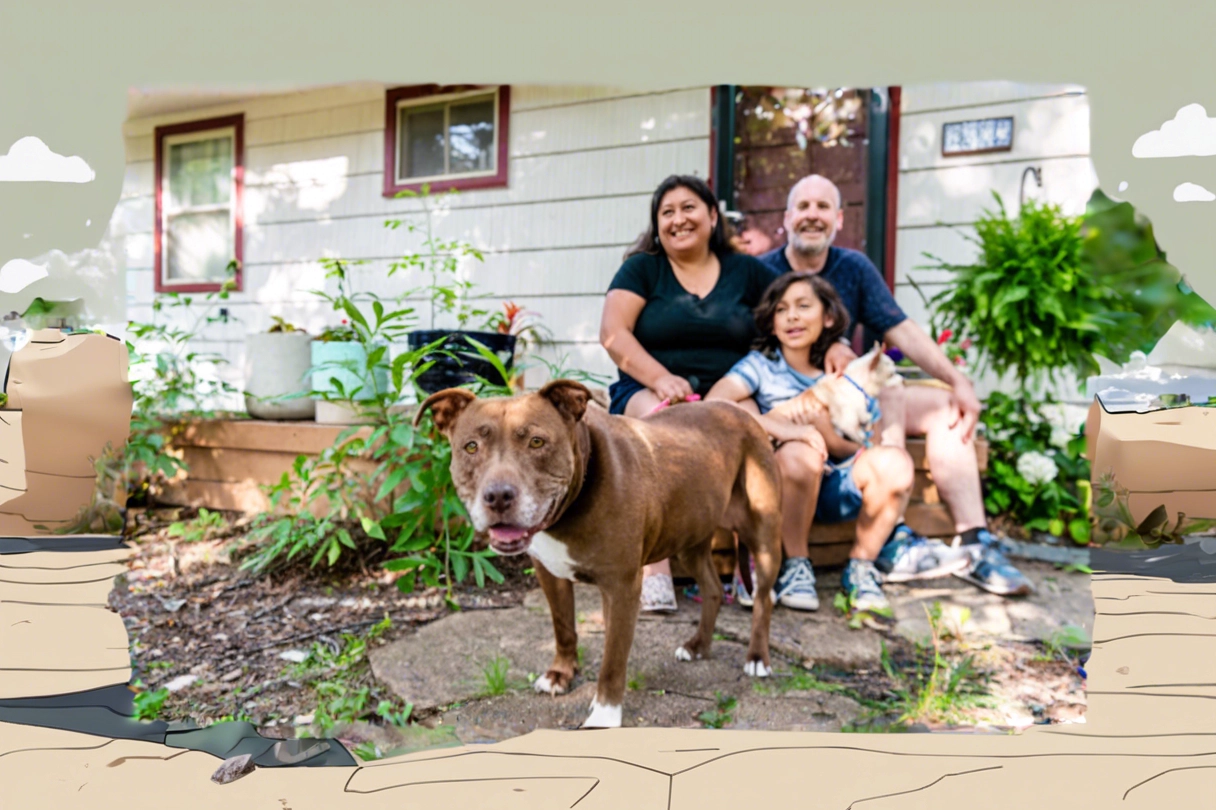

Most animal shelters continue to assign breed descriptors to dogs whose origin they do not know[1], even though current university research has shown that breed identification based on visual inspection correlates poorly with DNA breed signature, and that observers will disagree with each other when examining the same dog. These difficulties are only compounded when the descriptor itself is subject to different interpretations.
A study by researchers in the US and UK examines the question of whether animal shelter workers in the two countries could agree on “what constitutes a pit bull terrier.”[2] Perhaps the most interesting observation to be made here is the apparent confusion on the part of both the researchers and the respondents regarding what they meant by the term “pit bull” and how they struggled to relate it to any concept of breed.
Subjects were asked to look at photos of 20 dogs, assigning a “primary” breed label to each and explaining how they came to this conclusion.[3] They then went back through the photos and decided which dogs they considered to be “pit bulls.” Finally, they were given a list of what the authors described as “bull breed” and “Mastiff breed” names and asked which they considered to fall within a category they would call “pit bulls.”
We now have well duplicated findings that demonstrate the lack of agreement even among animal professionals with regard to visual breed identification.[4][5],[6] So it is not surprising that the animal shelter workers surveyed by Dr. Hoffman and her colleagues did not agree on which dogs they assigned specific breeds to or which they considered to be “pit bulls”. They did not agree either within or between the two countries surveyed. The authors rightly concluded that their results “bring into question the validity of determining breed identity based on appearance,” and “highlight some issues regarding the practical utility of BSL.”
Using “pit bull” and “pit bull type” apparently interchangeably, the authors did not offer a definition of either term, but rather left the definition to the “intuition and prior experience” of the respondents.[7] This is not a fault of the study methodology, but simply a reflection of the fact that there is no generally accepted definition of any of these terms.
“A breed,” according to the seminal work on the topic completed more than 50 years ago, “is not defined by conformity to type, but by common ancestry and absence of outbreeding.”[8] The reason that Scott and Fuller specifically excluded “conformity to type,” i.e., morphology, is that they understood that genetic relatedness cannot be inferred from physical resemblance. Membership in a breed is a matter of close genetic relatedness, generally documented through pedigrees, and recognizes no dogs with ancestors from outside the group for a specified number of generations.
Misunderstanding the meaning of breed led to the first level of confusion in this study. When asked to identify the photos according to breeds, respondents offered both descriptors like Staffordshire Bull Terrier, Boxer, American Bulldog, Labrador Retriever, etc. which are actual breeds, and others, such as “pit bull,” and “terrier,” which are not breeds according to any major national registry that documents pedigrees and limits registration to closed gene pools.
Survey participants were also stumped by the question of which breeds to classify as “pit bull type.” This too is understandable, as no such category exists. Breeds of dogs are categorized by the major breed organizations by “groups,” largely according to folklore regarding the traditional work of the breeds with the group. Aptitude for such historical behaviors is no longer expressed among such breed groups, however.[9] “Terrier,” for example, is one such group in the major breed club associations of both the US and the UK.
“Pit bull,” on the other hand, is not. “Pit bull” is not a breed. It is a social construct, the perception of an individual or group, an idea that is invented and ‘constructed’ through cultural or social practice.
“Pit bull” exists because people agree to behave as if it does, even though they can’t tell you exactly what they mean by the term. In past litigation in Ohio, the county dog warden summed it up nicely when he admitted that there really was no way to tell whether or not a dog was a “pit bull,” and that the determination was a matter of subjective opinion.[10] Differences of definition, lack of agreement between visual identifications and DNA breed signatures, disagreement among observers looking at the same dog, and poor understanding of the meaning of breed and genetic relatedness, mean that an individual’s belief as to whether or not a dog is a “pit bull” may have no scientific significance whatsoever, but severe consequences with respect to the welfare of an individual dog.
Sources and Notes: